
How Japanese Fashion Brands Source Custom Caps from Indonesia: A Complete Buyer’s Guide
For Japanese fashion brands and retailers seeking reliable manufacturing partners, the phrase custom caps manufacturer Japan Indonesia has become increasingly significant in procurement conversations. Indonesia has emerged as one of Asia’s most competitive headwear manufacturing destinations, combining skilled craftsmanship, competitive pricing, and scalable production capacity. Japanese buyers — known globally for their uncompromising standards in quality, consistency, and attention to detail — are discovering that carefully selected Indonesian manufacturers can meet and, in many cases, exceed those expectations. This guide explores how this sourcing relationship works, what to look for, and how to approach the process with confidence.
Why Japanese Brands Are Turning to Indonesian Cap Manufacturers
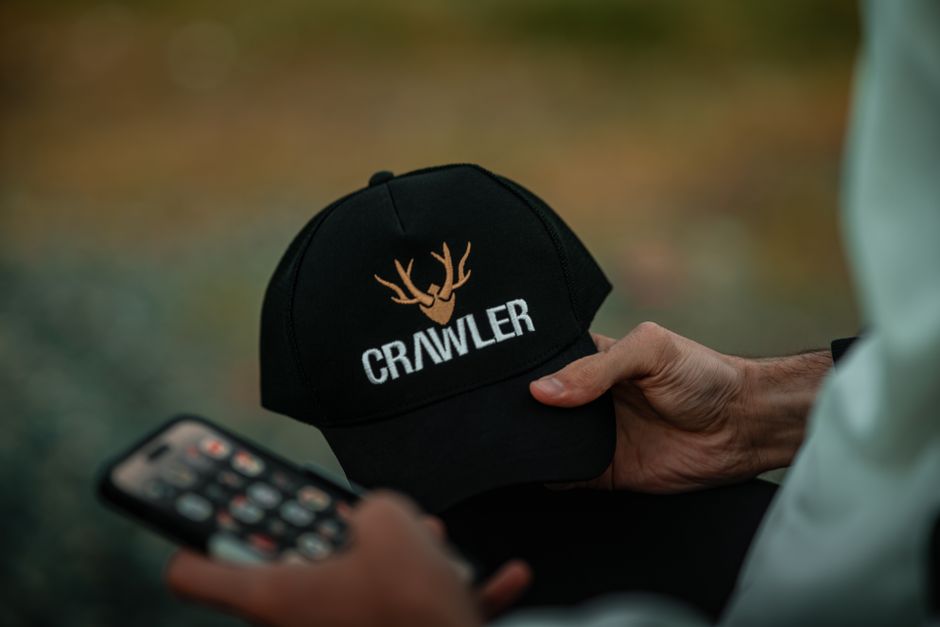
Japan’s domestic textile and accessory manufacturing sector, while prestigious, comes with significant cost constraints. Producing custom caps locally in Japan can be prohibitively expensive, particularly for mid-sized fashion labels, streetwear brands, or retailers looking to launch private-label headwear collections. Indonesia presents a compelling alternative for several interconnected reasons.
- Labor expertise: Indonesia has decades of experience in garment and accessory manufacturing, with a workforce deeply familiar with technical specifications, stitch density, and finishing standards.
- Material availability: Indonesian factories have access to a broad range of fabrics — from structured wool-blend caps to lightweight performance materials — reducing lead times on sourcing.
- Cost efficiency: Production costs in Indonesia are substantially lower than in Japan or South Korea, without the quality compromises often associated with lower-cost markets.
- Proximity: Geographically, Indonesia sits within the broader Asia-Pacific supply chain network, enabling relatively efficient shipping to Japan compared to manufacturers in Europe or the Americas.
For a Japanese brand producing 500 structured baseball caps domestically at ¥3,500–¥5,000 per unit, sourcing the same product from a qualified Indonesian manufacturer — at approximately ¥800–¥1,800 per unit (roughly USD $5–$12 depending on specifications) — can represent a transformative reduction in cost of goods, freeing up margin for branding, retail, and marketing investment.
What to Look for in a Custom Caps Manufacturer for Japan-Indonesia Sourcing
Japanese buyers approach vendor selection with rigorous due diligence, and rightfully so. The headwear category involves a remarkable number of variables: panel count, crown structure, brim shape, closure type, embellishment method, and labeling — each of which must be executed precisely and consistently across every unit in a production run. When evaluating a custom caps manufacturer for Japan Indonesia sourcing, consider the following criteria carefully.
Quality Control Infrastructure
Quality control is not a single checkpoint at the end of production — it is a system. Look for manufacturers that implement in-line quality inspection at each stage: fabric cutting, assembly, embellishment application, and final finishing. Ask specifically about defect rate targets, how they are measured, and what remediation process exists when standards are not met. Any reputable manufacturer should be able to provide documentation of their QC procedures upon request.
Decoration Capabilities
Japanese fashion brands typically require high-precision embellishment. Confirm that a prospective manufacturer offers the full range of decoration methods — custom embroidery, screen printing, heat transfer, woven labels, and rubber patches — and request samples of each technique before committing to bulk production. Stitch count, thread color matching (Pantone or similar standard), and ink cure quality should all be evaluated objectively.
Minimum Order Quantities and Sampling Process
For emerging brands or seasonal launches, MOQ flexibility matters considerably. Manufacturers offering MOQs from 100 units per style allow Japanese buyers to test new cap designs without overcommitting inventory. Equally important is the sampling timeline: a manufacturer that can deliver production-quality samples within 7–14 days demonstrates both operational competence and responsiveness — two qualities Japanese business culture holds in high regard.
Communication and Accountability
Language, time zone, and responsiveness can become significant friction points in international manufacturing relationships. Japanese buyers should prioritize manufacturers with English-proficient account teams, structured order tracking, and a clear escalation process when issues arise. Manufacturers with regional offices or oversight in Singapore or other established business hubs often provide an additional layer of accountability and legal clarity.
Understanding the Pricing Structure for Custom Cap Orders from Indonesia
Transparent pricing is essential for accurate cost modelling and honest vendor relationships. When sourcing caps from Indonesian manufacturers, Japanese buyers should understand the key factors that influence unit pricing.
- Order volume: Unit cost decreases meaningfully as volume increases. An order of 100 units will carry a higher unit price than an order of 1,000 or 5,000 units.
- Cap style and construction: A 6-panel structured snapback with a flat brim involves different tooling and labor than a 5-panel unstructured dad hat. More complex construction commands higher pricing.
- Embellishment method and placement count: A single front embroidery logo is typically the most cost-effective option. Adding side embroidery, under-brim prints, and interior labels increases cost incrementally.
- Material selection: Premium materials — brushed cotton twill, wool blend, performance polyester, or leather brim panels — are priced higher than standard base fabrics.
- Shipping method and destination: Air freight to Japan is faster but more expensive than sea freight. For time-sensitive seasonal orders, the premium for air shipping should be factored into the total landed cost.
As a general benchmark, Japanese buyers sourcing structured custom caps from qualified Indonesian manufacturers should expect factory pricing in the range of approximately USD $5–$15 per unit (¥750–¥2,250 at current exchange rates), depending on the variables above. This compares favorably with equivalent quality production in Japan, South Korea, or Taiwan.
The Production Process: From Brief to Delivery
Understanding the end-to-end manufacturing timeline helps Japanese buyers plan seasonal launches, inventory cycles, and retail commitments with accuracy. A well-managed custom cap production process typically follows this sequence.
Step 1 — Technical Brief and Design Submission
The buyer submits cap specifications: style, material, color, size range, logo artwork (vector format recommended), label requirements, and packaging preferences. The more precise and complete this brief, the smoother the downstream process.
Step 2 — Sample Development
The manufacturer produces a pre-production sample, typically within 7–14 days. Japanese buyers should review samples against specification with the same rigor applied to final production — checking stitching, color accuracy, fit, and overall finishing before approving.
Step 3 — Sample Approval and Order Confirmation
Upon sample approval, the buyer confirms the bulk order quantity and issues a purchase order. A deposit (typically 30–50%) is required to commence production material procurement.
Step 4 — Bulk Production
Standard bulk production lead times for custom caps range from 20–30 days following sample approval and deposit receipt. During this phase, buyers should expect periodic production updates and have the option to request in-production photographs or third-party inspection services.
Step 5 — Final QC and Shipment
Completed units undergo final quality inspection before packing. Approved shipments are then dispatched via the buyer’s preferred freight method, with documentation provided for customs clearance in Japan.
Ventop Enterprise: A Manufacturer Built for Exacting Standards
One manufacturer well-positioned to serve Japanese fashion brands is Ventop Enterprise, a custom headwear manufacturer with production operations founded in Indonesia in 2015 and a Singapore headquarters established in 2025 at 160 Robinson Road, #14-04, Singapore Business Federation Center. With over 500,000 caps produced for more than 40 global brands across the United States, Canada, Europe, the Middle East, and Asia-Pacific, ventop.co represents the kind of structured, experience-backed operation that Japanese buyers can evaluate with confidence.
Ventop’s service offering covers the full spectrum of headwear customization: custom embroidery, screen printing, heat transfer, private label, OEM, and ODM production. Their MOQ begins from 100 units — accessible for smaller initial orders — with samples delivered within 7–14 days and bulk production completed in 20–30 days. The Singapore oversight structure provides an established business address, legal accountability, and a communication layer that bridges Indonesian production operations with international buyer expectations. For Japanese brands seeking a custom caps manufacturer with Japan Indonesia sourcing experience and demonstrated global production capacity, ventop.co warrants serious consideration.
Practical Tips for Japanese Buyers Sourcing Caps from Indonesia
- Always request production samples, not showroom samples. Samples should be made on the actual production line using the same materials specified for your bulk order.
- Provide detailed technical packs. The more specific your documentation — including Pantone color codes, stitch count requirements, and label placement diagrams — the fewer revision cycles you will face.
- Clarify intellectual property terms in writing. Confirm that your designs, logos, and private label marks will not be used for other clients. This is standard practice but should be stated explicitly in your manufacturing agreement.
- Plan for customs and import duties. Work with a Japan-based customs broker familiar with headwear import classifications to accurately forecast your total landed cost.
- Build a relationship, not just a transaction. Indonesian manufacturers who work consistently with Japanese brands tend to develop strong familiarity with the quality expectations involved. A long-term vendor relationship will yield progressively better results.
Frequently Asked Questions from Japanese Buyers
Q1: Is it common for Japanese fashion brands to manufacture caps in Indonesia?
Yes, increasingly so. Japanese streetwear labels, lifestyle brands, and retail chains are among the international buyers sourcing headwear from Indonesia. The country’s manufacturing sector has matured considerably, and with proper vendor selection and quality oversight, Indonesian production can meet Japanese market standards.
Q2: How do I verify the quality of an Indonesian cap manufacturer before placing a bulk order?
Request a paid sample order first. Evaluate the sample against your full technical specification, including material, construction, embellishment accuracy, and finishing. You may also engage a third-party inspection service to conduct an independent factory audit before committing to bulk production.
Q3: What is the typical minimum order quantity for custom caps from Indonesia?
MOQs vary by manufacturer. Many established factories require 300–500 units per style as a minimum. However, manufacturers such as Ventop Enterprise offer MOQs from 100 units, which is well-suited for test orders, seasonal collections, or brands in early growth stages.
Q4: How long does it take to receive custom caps in Japan from an Indonesian manufacturer?
Assuming sample approval has been completed, bulk production typically takes 20–30 days. Air freight from Indonesia to Japan generally requires 3–7 additional business days, while sea freight may take 10–14 days. Japanese buyers should plan total lead times of 4–7 weeks from order confirmation to delivery, depending on freight selection.
Q5: What currency is typically used for payment, and are there currency considerations for Japanese buyers?
Most Indonesian manufacturers invoice in USD. Japanese buyers should account for USD/JPY exchange rate fluctuations when budgeting orders. At recent exchange rates (approximately ¥150 per USD), a cap priced at USD $8 per unit equates to roughly ¥1,200 per unit — exclusive of shipping and import duties. Forward exchange contracts or timely payment can help manage currency exposure on larger orders.
Conclusion: Building a Reliable Cap Sourcing Partnership Between Japan and Indonesia
For Japanese fashion brands seeking to produce high-quality custom headwear at competitive cost, Indonesia represents a well-established and increasingly sophisticated manufacturing destination. The key to success lies not in simply finding the lowest price, but in identifying a custom caps manufacturer for Japan Indonesia sourcing that demonstrates rigorous quality control, transparent communication, proven production experience, and the accountability structures that Japanese business standards require. With careful due diligence, a clearly documented technical brief, and a structured sampling process, Japanese brands can build productive long-term manufacturing partnerships that support consistent product quality and scalable growth. To get a quote, visit ventop.co or WhatsApp +65 9372 7194.
Custom Cap Manufacturer · Singapore & Indonesia
Ready to Order? Order from Japan.
Premium quality manufacturing for Japanese brands. We meet Japanese quality standards. Sample ready in 7–14 days. Bulk in 20–30 days. From 100 units.
Ventop Enterprise Pte. Ltd. · 160 Robinson Road, #14-04, Singapore 068914 ·
ventop.co