
Private Label Cap Japan: Why Japanese Brands Are Choosing Southeast Asian Manufacturing
For Japanese brands seeking reliable, high-quality private label cap Japan solutions, the manufacturing landscape has shifted considerably in recent years. Where once domestic production or Korean suppliers dominated procurement decisions, a growing number of Japanese fashion labels, sports brands, outdoor companies, and corporate buyers are now turning to Singapore-supervised, Indonesia-based manufacturers for custom headwear. The reasons are clear: competitive pricing without compromising the meticulous quality standards that Japanese buyers rightfully expect, shorter lead times, and a level of service consistency that aligns with the precision-driven culture of Japanese business. This article outlines everything a Japanese brand or buyer should know before engaging a private label headwear manufacturer — from quality benchmarks and production processes to pricing guidance and what to look for in a long-term supplier.
What Is Private Label Headwear Manufacturing?
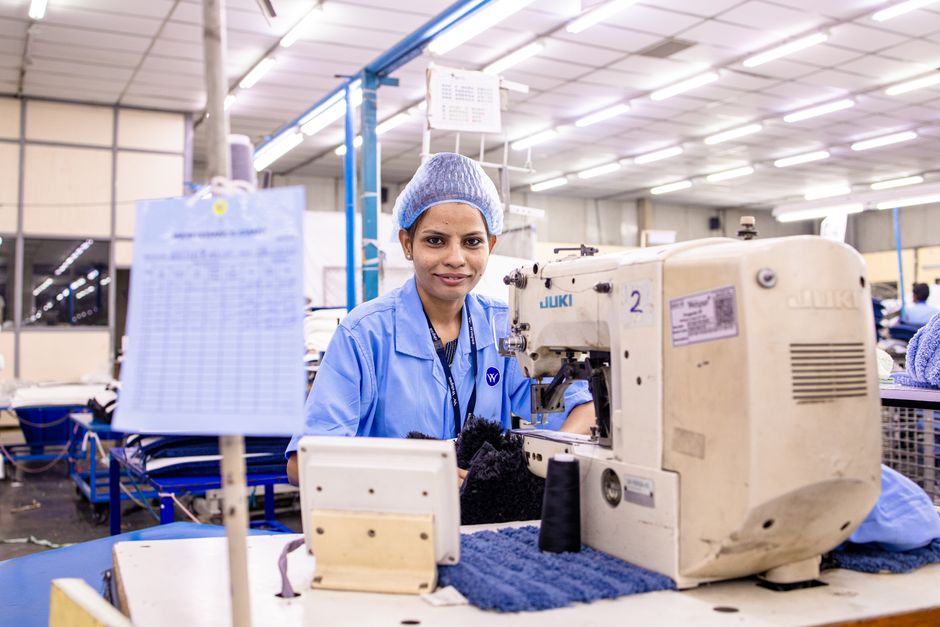
Private label headwear manufacturing refers to the process of producing caps and hats that carry your brand’s identity — your logo, your colors, your labels — manufactured by a third-party factory under your specifications. Unlike off-the-shelf wholesale purchasing, private label production gives brands full control over design, materials, construction, and packaging.
For Japanese brands in particular, this distinction matters deeply. A private label arrangement means:
- Exclusive design ownership — the product is developed specifically for your brand and not sold to any other buyer
- Material selection — you specify the fabric weight, crown structure, brim stiffness, sweatband lining, and closure type
- Brand labeling — woven neck labels, hang tags, printed inner taping, and custom packaging are all produced to your specifications
- Decoration method control — whether your preference is embroidery, screen printing, heat transfer, or a combination, the technique is selected to suit your artwork and positioning
This model is widely used across Japan’s apparel, streetwear, outdoor recreation, corporate gifting, and sports sectors. It allows brands of all sizes — from independent designers in Tokyo to large retail chains — to offer headwear products that genuinely reflect their identity.
Why Quality Control Is the Most Critical Factor for Japanese Buyers
Japanese consumers hold products to an exceptionally high standard. A cap that passes quality inspection in many other markets may still fail to meet Japanese retail expectations. Stitching uniformity, logo registration accuracy, colorfast consistency, and structural integrity are not optional considerations — they are baseline requirements.
When sourcing a private label cap Japan manufacturer, Japanese buyers should specifically evaluate the following quality control measures:
- Pre-production sample approval — no bulk production should commence without a signed-off, production-equivalent sample
- Inline inspection — quality checks conducted during production, not only at the end
- AQL (Acceptable Quality Level) standards — industry-standard inspection protocols applied to finished goods before shipment
- Measurement consistency — each unit in a bulk order should conform to agreed specifications within tight tolerances
- Color matching — Pantone-referenced color matching for embroidery thread and printed elements
One significant advantage of working with a manufacturer that maintains a Singapore management headquarters is that operational oversight, client communication, and quality supervision occur under a business environment with strong regulatory standards and transparent practices. This gives Japanese buyers a layer of accountability that purely factory-direct relationships may lack.
Private Label Cap Japan: Understanding Pricing and MOQ
One of the most practical questions Japanese buyers ask concerns pricing. Headwear manufacturing costs vary based on cap style, decoration complexity, material specification, and order volume. As a general reference point in USD terms, structured six-panel caps with embroidery typically fall within the USD 4.00–9.00 per unit range at commercially viable quantities, though premium materials, complex decoration, or specialty constructions can move this higher. For JPY-based budgeting, buyers should account for the current exchange rate; at approximately ¥150 per USD, a mid-tier cap at USD 6.00 equates to roughly ¥900 per unit before freight and duties.
Key pricing factors include:
- Cap style — six-panel structured, five-panel, bucket hat, trucker, dad cap, or fitted styles each carry different base costs
- Decoration — multi-color embroidery with high stitch counts costs more than single-color screen printing
- Material grade — premium wool blends, Japanese-sourced twill, or technical fabrics increase unit cost
- Order volume — cost per unit decreases meaningfully as order quantities increase beyond 500 units
- Packaging requirements — individual polybag packing, custom tissue, or retail box packaging adds to landed cost
Minimum order quantities (MOQ) are an important consideration for Japanese brands testing new headwear lines. Reputable manufacturers now offer MOQs starting from as low as 100 units per style, making it viable for smaller brands or product launches to proceed without overcommitting inventory investment.
The Production Process: From Brief to Delivery
Understanding the manufacturing timeline allows Japanese buyers to plan their seasonal calendars accurately. A well-structured production process follows these stages:
1. Design Briefing and Quotation
The buyer submits artwork files (AI, EPS, or high-resolution PDF), specifies cap style, material preference, color requirements, label details, and target quantity. The manufacturer responds with a formal quotation and tech pack for review.
2. Sample Development
Upon quotation approval and sample fee payment, the factory produces a pre-production sample. For buyers working with manufacturers like Ventop Enterprise, sample turnaround is typically 7 to 14 working days. The sample is shipped to the buyer in Japan for physical review and approval.
3. Sample Approval and Production Confirmation
The buyer reviews the sample, requests any amendments, and provides written approval. A formal purchase order is confirmed along with production deposit payment.
4. Bulk Production
Once the deposit is received, bulk manufacturing commences. Standard bulk lead times are 20 to 30 working days depending on order complexity and volume.
5. Quality Inspection and Shipment
Finished goods undergo final inspection against the approved sample and agreed specifications. The buyer may request third-party inspection at this stage. Shipment is arranged via air freight or sea freight depending on delivery timeline requirements, with full export documentation provided.
Decoration Methods Best Suited to Japanese Headwear Standards
Japanese brands typically favor decoration methods that convey craftsmanship and longevity. The most appropriate techniques for private label headwear targeting Japanese consumers include:
- Custom embroidery — the preferred method for premium, retail-grade caps. Dense stitch counts, precise pull compensation, and quality backing materials ensure logos sit flat, clean, and durable after repeated washing
- Woven labels — inner neck labels and side labels woven in fine detail convey quality far more effectively than printed alternatives
- Heat transfer — suitable for complex photographic or gradient artwork that embroidery cannot replicate; high-quality heat transfer films offer strong wash durability
- Screen printing — effective for large flat-surface designs, particularly on bucket hats or panels with broad print areas
- Leather patch with debossing — increasingly popular with Japanese streetwear and outdoor labels seeking a tactile, artisanal finish
Reputable manufacturers will advise on which method best suits a given design brief rather than defaulting to the most convenient option for production.
Ventop Enterprise: A Singapore-Supervised Manufacturing Solution for Japanese Brands
Ventop Enterprise is a custom cap and headwear manufacturer with production facilities in Indonesia and headquarters established in Singapore at 160 Robinson Road, #14-04, Singapore Business Federation Center. Having produced over 500,000 caps for more than 40 global brands since its founding in Indonesia in 2015, the company serves buyers across the United States, Canada, Europe, the Middle East, and the Asia-Pacific region — including Japan.
For Japanese buyers specifically, the Singapore management presence provides practical advantages: business communication conducted in professional English with full documentation transparency, invoicing aligned to international trade standards, and a management layer that bridges the cultural and operational expectations of Japanese procurement professionals with the efficiency of Indonesian production.
Services offered include custom embroidery, screen printing, heat transfer, private label, OEM, and ODM manufacturing, with MOQ starting from 100 units. Samples are delivered within 7 to 14 days, and bulk orders are fulfilled within 20 to 30 days. Japanese brands interested in exploring a manufacturing partnership are welcome to visit ventop.co or reach out directly via order@ventop.co or WhatsApp for an initial consultation and quotation.
Tips for Japanese Brands Placing Their First Private Label Cap Order
For buyers approaching private label headwear manufacturing for the first time, the following practical recommendations will help ensure a smoother first production cycle:
- Prepare complete artwork files before requesting a quote — vector files significantly reduce misinterpretation and allow for accurate decoration cost assessment
- Order a sample before committing to bulk — physical sample review is essential; images and digital renders cannot fully replicate the tactile reality of a produced cap
- Specify your target retail price point early — informing your manufacturer of the consumer price you are targeting allows them to recommend the most appropriate construction and materials within your cost parameters
- Request a detailed tech pack — a well-documented tech pack that records all specifications protects both parties and serves as the reference document for quality inspection
- Confirm shipment terms clearly — understand whether pricing is quoted EXW, FOB, or CIF, and account for Japanese customs duties applicable to imported headwear
- Build in time for sample revisions — it is not uncommon to require one or two rounds of sample amendment; plan your production schedule to accommodate this without compressing bulk production timelines
Frequently Asked Questions: Private Label Cap Manufacturing for Japan
Q1: What is the minimum order quantity for private label caps shipped to Japan?
Most reputable private label manufacturers now offer MOQs starting from 100 units per style or colorway. This makes it commercially viable for Japanese brands to test new headwear products without placing large initial commitments. As order volumes increase, per-unit costs decrease and additional customization options — such as custom lining or specialty hardware — become cost-effective.
Q2: How long does a full private label cap order take from briefing to delivery in Japan?
Buyers should plan for a total timeline of approximately 6 to 10 weeks from initial briefing to delivery at a Japanese address. This accounts for quotation, sample development (7–14 days), sample shipping and review, bulk production (20–30 days), quality inspection, and international freight. Air freight from Indonesia to Japan typically takes 5 to 7 business days; sea freight is longer but more economical for large volume orders.
Q3: Can manufacturers accommodate Japanese-specific quality standards such as material certifications or labeling requirements?
Experienced private label manufacturers can accommodate material certifications (such as OEKO-TEX Standard 100), specific country-of-origin labeling requirements, and care instruction labels in Japanese. These should be specified clearly in the initial brief. Japanese import regulations for textile goods require accurate fiber content and care labeling, which a knowledgeable manufacturer will facilitate as a matter of standard practice.
Q4: What decoration method is most appropriate for a premium Japanese retail cap brand?
For premium retail positioning in Japan, custom embroidery combined with woven interior labels consistently delivers the quality perception that Japanese consumers associate with well-crafted headwear. Embroidery provides tactile quality, durability, and a structured appearance that prints cannot replicate at the same perceived value level. For brands with graphic-intensive logo treatments, a combination of embroidery and leather patch can achieve a distinctive, high-end result.
Q5: Is it possible to request a factory or production audit before committing to an order?
Yes, and for Japanese buyers this is a reasonable and professionally appropriate request. Established manufacturers will be able to provide documentation of their production facilities, quality inspection processes, and existing client references. Some buyers arrange third-party inspection through agencies such as SGS or Bureau Veritas for pre-shipment quality verification — this is a widely accepted practice in international headwear procurement and should not present any issue for a credible manufacturing partner.
Conclusion: Finding the Right Private Label Cap Japan Manufacturing Partner
Japanese brands and buyers entering the private label headwear space have access to a stronger range of manufacturing options than at any previous point. The key to a successful outcome lies in selecting a manufacturer whose quality standards, communication practices, and operational transparency align with the expectations that define Japanese business culture. Consistency, meticulous attention to specification, honest lead times, and a structured quality control process are not negotiable elements — they are the foundation of a productive, long-term manufacturing relationship.
When evaluating a private label cap Japan manufacturing partner, prioritize those who offer documented quality assurance processes, produce representative pre-production samples, communicate with precision, and have a verifiable track record with international brands. The Singapore-Indonesia manufacturing model, with its combination of cost-competitive production and professionally managed client oversight, represents a compelling option for Japanese buyers seeking both quality and value. To get a quote, visit ventop.co or WhatsApp +65 9372 7194 to begin a conversation with a team that understands what Japanese brands require.
Custom Cap Manufacturer · Singapore & Indonesia
Ready to Order? Order from Japan.
Premium quality manufacturing for Japanese brands. We meet Japanese quality standards. Sample ready in 7–14 days. Bulk in 20–30 days. From 100 units.
Ventop Enterprise Pte. Ltd. · 160 Robinson Road, #14-04, Singapore 068914 ·
ventop.co