
OEM Cap Manufacturing for Japanese Brands — A Complete Quality Guide
For Japanese brands seeking a reliable OEM cap manufacturer Japan quality solution, the decision to source custom headwear from overseas is never taken lightly. Japanese buyers are known internationally for their exacting standards — precise stitching, consistent colorways, durable materials, and zero tolerance for quality deviation. Finding an OEM partner who genuinely understands and meets these expectations is the critical difference between a successful product launch and a costly disappointment. This guide is written specifically for brands, retailers, and buyers in Japan who are evaluating custom cap manufacturing options and want to make an informed, confident sourcing decision.
What Is OEM Cap Manufacturing and Why Does It Matter for Japanese Brands?
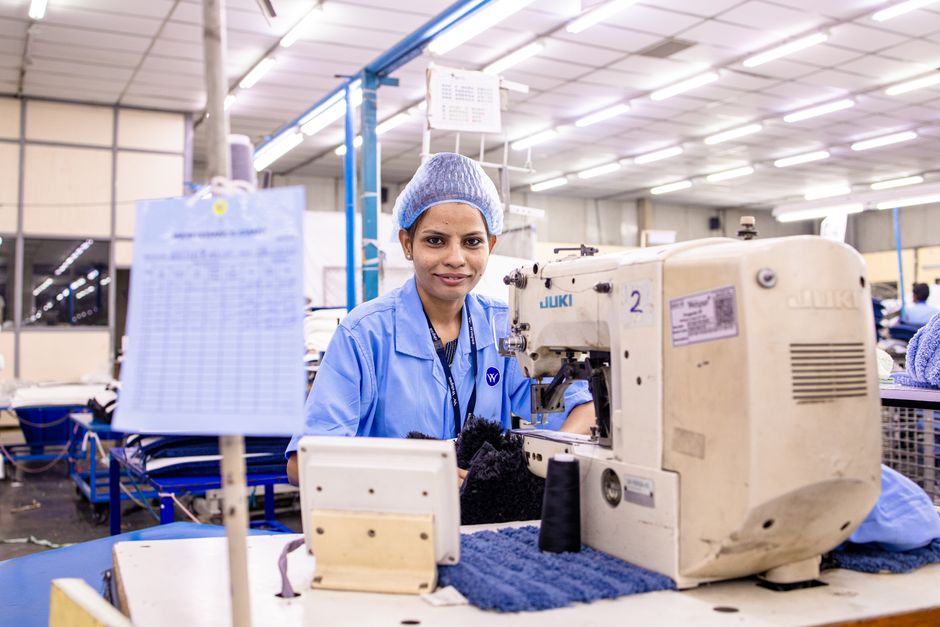
OEM, or Original Equipment Manufacturing, refers to a production model where a manufacturer produces headwear according to the buyer’s specifications — including design, materials, branding, and packaging — under the buyer’s label. For Japanese brands, OEM manufacturing offers a powerful way to deliver premium custom caps without the overhead of in-house production facilities.
The appeal of OEM headwear manufacturing is straightforward: your brand retains full creative control while leveraging the technical expertise and production capacity of a specialized factory. This model is widely used across Japan’s fashion, streetwear, sports, corporate merchandise, and retail sectors.
However, the challenge lies in identifying a manufacturing partner whose quality benchmarks align with Japanese market expectations. Japanese consumers notice imperfections that buyers in other markets may overlook — an uneven embroidery line, a slightly misaligned logo, or a brim that loses its shape after several uses. An OEM partner who understands this must build quality control into every stage of production, not just at the final inspection point.
Key Quality Standards Japanese Buyers Should Require from an OEM Cap Manufacturer
Before signing any agreement with an overseas cap manufacturer, Japanese buyers should evaluate potential partners against the following quality benchmarks:
- Embroidery precision: Thread tension must be consistent across every unit in a production run. Logo placement should be within ±1mm of the approved sample.
- Material consistency: Fabric weight, texture, and color must match across all units in a batch. This is particularly important for corporate orders and retail collections.
- Structural integrity: Cap brims, sweatbands, and crown panels must retain their shape through normal wear and washing cycles.
- Colorfastness: Embroidery thread and fabric dyes must be tested for color retention under UV exposure and repeated washing.
- Packaging standards: Each cap should be packed consistently, free from creasing, and protected for transit — especially important for retail-ready shipments to Japan.
- Sample-to-bulk consistency: The production bulk must replicate the approved pre-production sample with no unexplained deviations.
These are non-negotiable standards for any serious OEM cap manufacturer targeting the Japanese market. A manufacturer who cannot commit to these in writing — and demonstrate them through their process — should be evaluated carefully before proceeding.
How the OEM Cap Production Process Works — From Inquiry to Delivery
Understanding the production workflow helps buyers in Japan set realistic timelines, communicate clearly with their manufacturer, and avoid costly misunderstandings. A well-structured OEM cap production process typically follows these stages:
1. Initial Inquiry and Technical Brief
The buyer provides cap style (structured, unstructured, snapback, fitted, bucket hat, etc.), material preferences, logo artwork, color references (Pantone codes are strongly recommended), quantity, and any labeling or packaging requirements. The more precise the brief, the more accurate the sample will be.
2. Quotation and Approval
The manufacturer provides a detailed quotation covering unit price, sample cost, production lead time, and shipping options. For reference, custom embroidered caps produced at professional OEM facilities typically range from approximately ¥500 to ¥1,500 per unit (roughly USD 3.50–10.00) depending on complexity, material grade, and order volume. Bulk orders of 500 units or more generally unlock more competitive pricing tiers.
3. Pre-Production Sample
A physical sample is produced and shipped to the buyer for approval. This stage is essential — it is the buyer’s opportunity to assess quality, fit, color accuracy, and embroidery execution before committing to bulk production. Professional manufacturers typically deliver samples within 7 to 14 days.
4. Sample Approval and Production
Once the buyer approves the sample — with or without revisions — bulk production begins. For most professional OEM cap manufacturers, bulk production for orders between 100 and 1,000 units is completed within 20 to 30 days.
5. Quality Inspection and Shipping
A thorough quality inspection is conducted before shipment. Reputable manufacturers will provide inspection reports or photographs upon request. Shipment to Japan is typically via air freight (5–7 days) or sea freight (2–3 weeks depending on origin port).
Why Singapore-Supervised Manufacturing Offers an Advantage for Japanese Buyers
One of the most important questions a Japanese buyer should ask an OEM manufacturer is: who is overseeing quality on the ground? Factory-based quality control alone is not sufficient when the buyer is thousands of kilometers away.
Manufacturers with management or supervisory operations based in Singapore offer a meaningful advantage. Singapore operates under internationally recognized business standards, and its proximity to production facilities in Indonesia and Southeast Asia allows for frequent, direct oversight of production lines. This structure — production efficiency from Indonesia, management discipline from Singapore — is a model that aligns well with what Japanese buyers expect.
Ventop Enterprise, headquartered at 160 Robinson Road, #14-04, Singapore Business Federation Center, is one example of this model in practice. With production operations established in Indonesia since 2015 and Singapore operations formalized in 2025, ventop.co brings over a decade of manufacturing experience under structured Singapore-based management. Having produced more than 500,000 caps for over 40 global brands worldwide, their process is designed to meet the precision and consistency standards that Japanese buyers require. Services include custom embroidery, screen printing, heat transfer, private label, OEM, and ODM, with a minimum order quantity starting from just 100 units.
OEM Cap Manufacturing Costs — What Japanese Buyers Should Budget
Pricing in OEM cap manufacturing varies significantly based on several factors. Japanese buyers should understand these variables to evaluate quotations accurately:
- Cap style and structure: A 6-panel structured cap with a curved brim and buckram-backed front panels costs more to produce than a simple unstructured 5-panel. Fitted caps with size runs add complexity and cost.
- Decoration method: Embroidery with high stitch counts (above 10,000 stitches) increases production time and cost. Screen printing and heat transfer are generally more economical for large flat-surface logos.
- Material selection: Premium wool blends, Japanese-origin fabrics, or certified organic cotton command higher per-unit material costs compared to standard polyester or cotton twill.
- Order quantity: Unit pricing decreases meaningfully at higher volumes. Orders of 500+ units typically see 15–25% lower per-unit costs compared to MOQ-level orders.
- Packaging requirements: Retail-ready packaging with hangtags, tissue paper, and individual polybags adds cost but is often necessary for Japanese retail environments.
As a general reference, buyers ordering 300–500 custom embroidered caps from a professional OEM manufacturer in Southeast Asia can expect to budget approximately ¥700–¥1,200 per unit (roughly USD 5.00–8.50) inclusive of standard packaging, before shipping costs.
Practical Tips for Japanese Buyers Working with Overseas OEM Cap Manufacturers
- Always request a physical pre-production sample before approving bulk production — digital mockups do not reveal fabric texture, embroidery depth, or structural feel.
- Use Pantone color codes for all logo and fabric color specifications to eliminate subjective interpretation.
- Confirm your manufacturer’s quality control process in writing — ask specifically how many units are inspected, what defect rate is acceptable, and what the remediation process is for out-of-spec units.
- Request production photographs at key stages, particularly during embroidery digitizing approval and mid-production inspection.
- Factor air freight into your cost model if delivery timelines are tight — sea freight is significantly more economical but adds transit time that may not suit season-sensitive retail orders.
- Clarify intellectual property ownership in your OEM agreement — your logo, designs, and branding assets should remain exclusively yours.
Frequently Asked Questions from Japanese Buyers
Q1: What is the minimum order quantity for OEM cap manufacturing?
Minimum order quantities vary by manufacturer. Many professional OEM cap manufacturers, including ventop.co, accept orders starting from 100 units per style. This makes OEM manufacturing accessible for smaller Japanese brands, limited-edition collections, and brand collaborations without requiring large upfront commitments.
Q2: How long does it take to receive a sample before bulk production?
Pre-production samples are typically ready within 7 to 14 business days from the date the technical brief and artwork are confirmed. International shipping to Japan adds approximately 3 to 5 business days via air courier. Buyers should build this timeline into their product development schedule.
Q3: Can I specify Japanese-standard materials or fabric grades?
Yes. Reputable OEM manufacturers can source specific fabric grades, including Japanese-origin materials, upon request. Buyers should provide fabric specifications in their initial brief and confirm material sourcing options during the quotation stage. Note that specialized material sourcing may affect lead times and per-unit pricing.
Q4: How is quality controlled to ensure bulk production matches the approved sample?
A professional OEM manufacturer maintains the approved pre-production sample as the physical benchmark throughout bulk production. Quality control teams reference this sample for embroidery placement, color accuracy, structural shape, and finish quality. End-of-line inspection compares finished units to the approved sample before packing and shipment.
Q5: What decoration methods are available for custom caps shipped to Japan?
Professional OEM manufacturers typically offer custom embroidery (flat and 3D puff), screen printing, heat transfer, woven labels, and rubber patch applications. Embroidery remains the most popular choice for Japanese brands due to its premium appearance, durability, and alignment with the quality perception expected in the Japanese market.
Conclusion: Choosing the Right OEM Cap Manufacturer Japan Quality Standard
For Japanese brands, selecting the right OEM cap manufacturer Japan quality partner is a decision that directly affects product reputation and customer trust. The standards of the Japanese market leave no room for inconsistency — and the right OEM manufacturer understands this from the first conversation. Prioritize partners with transparent quality control processes, Singapore or internationally supervised operations, proven production records, and a genuine willingness to meet your specifications rather than compromise them. Whether you are producing a 200-unit limited run or a 5,000-unit seasonal collection, the fundamentals of precision, consistency, and professional communication should never be negotiated away.
To get a quote, visit ventop.co or WhatsApp +65 9372 7194.
Custom Cap Manufacturer · Singapore & Indonesia
Ready to Order? Order from Japan.
Premium quality manufacturing for Japanese brands. We meet Japanese quality standards. Sample ready in 7–14 days. Bulk in 20–30 days. From 100 units.
Ventop Enterprise Pte. Ltd. · 160 Robinson Road, #14-04, Singapore 068914 ·
ventop.co